



Fifteen years before Lonely Kids Club was printing orders from a studio in Artarmon, Warwick Levy was hauling T-shirts around in plastic tubs, selling them at markets and outside gigs while trying to build a small clothing label.
The business began in 2011 after Levy left a construction degree at UNSW and travelled to Melbourne to work with an artist whose drawings had caught his attention. Lonely Kids Club later recalled launching its website with just five T-shirts and waiting about three weeks for its first online sale.
Levy continued selling shirts at markets and outside gigs while taking freelance work to support himself. An early lift came when a customer shared the brand’s Cecil sloth jumper in a Facebook group, helping the label reach people beyond Levy’s existing circle.
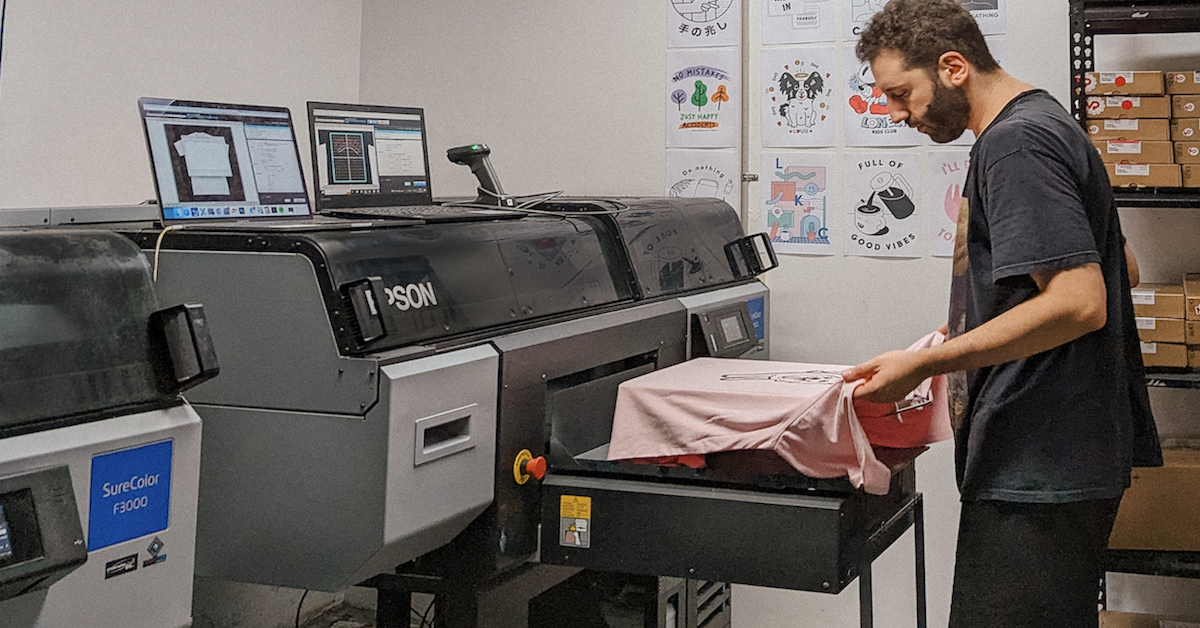
Fifteen years later, Lonely Kids Club has a four-person team and an Artarmon studio where orders are printed and packed as they arrive.
From early markets to Artarmon
Markets and live events were central to the label’s early years, but reaching customers gradually shifted towards social platforms, online advertising and a steady demand for new content.
The physical operation changed as well. Lonely Kids Club moved through several locations before settling in Artarmon in 2020, after earlier operating from Levy’s bedroom, a temporary Oxford Street shop and a site in St Leonards.
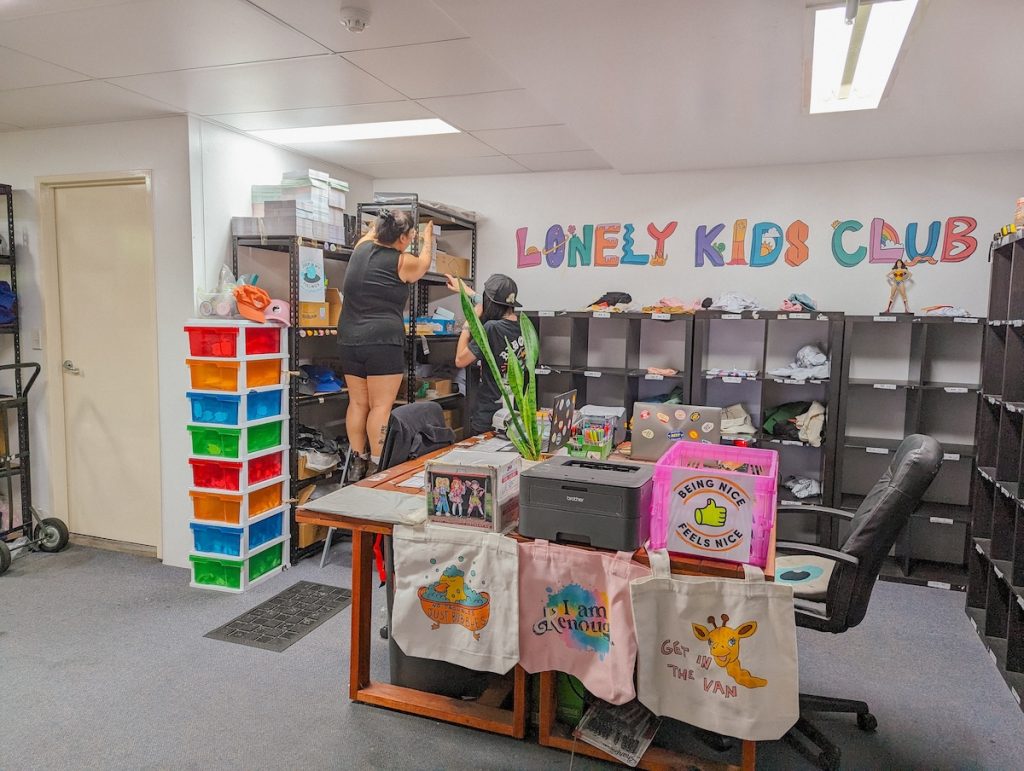
From Artarmon, the label runs a print-to-order model rather than producing large quantities of finished clothing in advance. Blank garments are kept at the studio and printed after orders are placed.
Levy said most of the blanks come from AS Colour. The supplier says its garment production is spread across factories in Bangladesh, China and Vietnam, while Lonely Kids Club completes its printing, packing and shipping in Sydney.
Keeping niche ideas in the range
Printing after an order arrives gives the team greater control over the finished product and reduces the need to commit to large batches before knowing whether a design will sell.
Levy said the model also allows smaller or more unusual designs to remain available. A shirt does not need to sell in huge numbers to justify a production run when each piece can be printed individually.
Inside the Artarmon studio, the work remains hands-on: designs are prepared, garments printed and pressed, then folded, packed and sent out.
The pressures behind a small label
Keeping an independent clothing business going has brought different pressures over the years.
Levy said blank garments and printing supplies cost more than they once did, while staff and artists still need to be paid properly. Passing every increase directly to customers is not always practical.
Running the online business now also involves work that played a much smaller role when Lonely Kids Club began, including managing changing social platforms, advertising and a continual stream of digital content.
Another challenge comes when original artwork appears online without permission.
Levy has spent time pursuing unauthorised copies of Lonely Kids Club designs appearing on major marketplaces. In September 2026, his efforts to remove Temu listings carrying copies of the label’s artwork drew attention to the difficulties small creators can face when pursuing unauthorised reproductions online. Temu said the reported listings were removed after complaints from Lonely Kids Club were received.
Levy said dealing with copied artwork takes time away from the work that drew him into the business in the first place: making clothes.
Birds with day jobs
Artist collaborations have remained central to Lonely Kids Club as the business has grown.
The company says participating artists are credited, receive commissions from sales and retain the rights to their work. Lonely Kids Club’s collaborator list includes illustrators and designers working across a wide range of styles.
Illustrator Kayla Reay’s Australian bird characters are among the more playful examples. Her drawings turn familiar species into recognisable characters: an ibis becomes a bin man, a magpie takes up cycling and a palm cockatoo sits behind a drum kit.
Other designs have dealt with mental health and self-expression, subjects that have appeared repeatedly across the label’s collections.
Still making things after 15 years
Levy’s plans for the next stage centre on more artist collaborations, work the team is proud of and greater support for causes connected with the label. Keeping the printing in Sydney remains part of that plan.
After 15 years of changing retail habits, rising costs and new online pressures, Levy still describes the appeal of the work in much the same terms: making something and seeing another person connect with it.
Published 7-Oct-2026